A building automation system (BAS) monitors and controls HVAC, lighting and often other systems from a single platform. The controls manager owns how well it does that.
The core loop
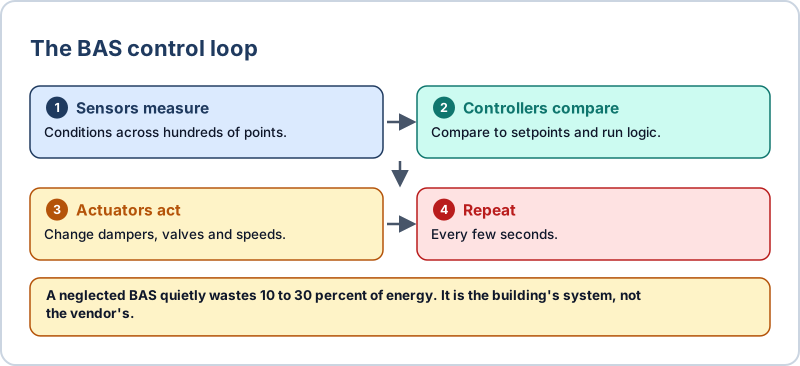
Sensors measure conditions, controllers compare them to setpoints and run logic, actuators change dampers, valves and speeds. Repeat every few seconds across hundreds of points.
What gets automated
Air handlers, terminal units, central plant, exhaust, lighting schedules, and increasingly meters, access and IAQ monitoring.
Why it matters
Comfort, energy cost, equipment life and the ability to diagnose problems all depend on the BAS being right. A neglected BAS quietly wastes 10 to 30 percent of energy.
Common mistake
Treating the BAS as a vendor’s system. It is the building’s system; the vendor is a service provider.
Key Takeaways
- Sensors measure conditions, controllers compare them to setpoints and run logic, actuators change dampers, valves and speeds.
- Air handlers, terminal units, central plant, exhaust, lighting schedules, and increasingly meters, access and IAQ monitoring.
- Comfort, energy cost, equipment life and the ability to diagnose problems all depend on the BAS being right.
Check Your Understanding
Which system in your building runs with no BAS connection at all?
Action Step
List every system in your building that the BAS controls and every system it only monitors. Note anything that runs on its own with no BAS connection.
This course is educational training. It does not issue a license, certification or credential, and it does not replace state or local licensing requirements, registered apprenticeships or employer safety programs. Always follow the current codes and standards that apply where you work, and never perform work you are not authorized or trained to do. This course is independent of and not affiliated with, endorsed by or accredited by any building automation vendor; product names are used for identification only, and you should verify current vendor documentation.