The chief engineer is the senior technical authority in a building. The promotion changes the job more than most people expect: less time on tools, more time on decisions.
What changes
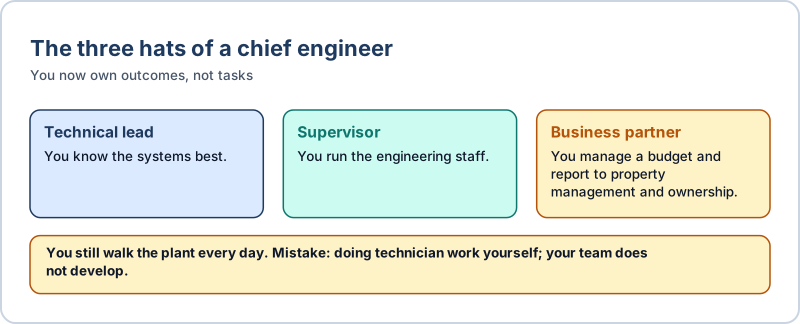
You now own outcomes, not tasks. When the chiller fails at 2 a.m., you are the one deciding whether to call the contractor, run on backup, or notify tenants — and you answer for the result.
The three hats
Technical lead (you know the systems best), supervisor (you run the engineering staff), and business partner (you manage a budget and report to property management and ownership).
What does not change
You still walk the plant every day. Chiefs who stop touching the building lose the instinct that makes them valuable.
Common mistake
Continuing to do the technician work yourself because it is faster. Your team does not develop and the management work goes undone.
Key Takeaways
- You now own outcomes, not tasks.
- Technical lead (you know the systems best), supervisor (you run the engineering staff), and business partner (you manage a budget and report to property management and ownership).
- You still walk the plant every day.
Check Your Understanding
What percentage of your week is spent on management rather than tools, and what should it be?
Action Step
List every task you did last week and mark each as technical, supervisory or business. If business is under 20 percent, plan what to hand off.
This course is educational training. It does not issue a license, certification or credential, and it does not replace state or local licensing requirements, registered apprenticeships or employer safety programs. Always follow the current codes and standards that apply where you work, and never perform work you are not authorized or trained to do.