HVAC is the business of moving heat. Understanding how heat moves and what people feel as comfort is the foundation of every diagnosis you will make.
Three ways heat moves
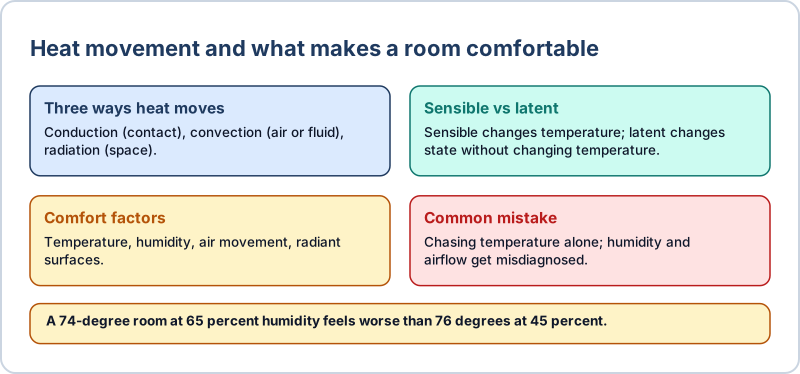
Conduction through solid contact, convection through moving air or fluid, and radiation through space. A furnace heat exchanger uses all three.
Sensible and latent heat
Sensible heat changes temperature; latent heat changes state (water to vapor) without changing temperature. Air conditioning removes both — the second is why condensate drips from your unit.
Comfort
Temperature, humidity, air movement and radiant surfaces together determine comfort. A 74-degree room at 65 percent humidity feels worse than 76 degrees at 45 percent.
Common mistake
Chasing temperature alone. Humidity and airflow complaints get misdiagnosed as thermostat problems constantly.
Key Takeaways
- Conduction through solid contact, convection through moving air or fluid, and radiation through space.
- Sensible heat changes temperature; latent heat changes state (water to vapor) without changing temperature.
- Temperature, humidity, air movement and radiant surfaces together determine comfort.
Check Your Understanding
Why can a room at higher temperature feel more comfortable than a cooler one?
Action Step
Measure temperature and relative humidity in two rooms of a building at the same time. Note which feels more comfortable and why the numbers explain it.
This course is educational training. It does not issue a license, certification or credential, and it does not replace state or local licensing requirements, registered apprenticeships or employer safety programs. Always follow the current codes and standards that apply where you work, and never perform work you are not authorized or trained to do. Refrigerant handling requires EPA Section 608 certification in the United States, and electrical and gas work must follow all applicable safety rules.