Utilities technicians keep the systems that deliver electricity, gas, water and wastewater running. The work is outdoors, hands-on, technical and essential.
The main branches
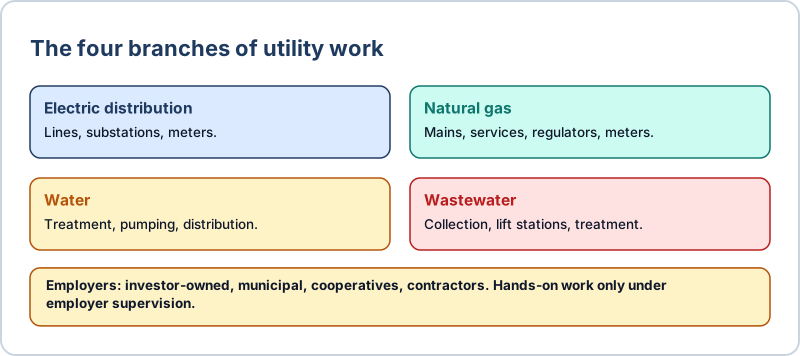
Electric distribution (lines, substations, meters), natural gas (mains, services, regulators, meters), water (treatment, pumping, distribution) and wastewater (collection, lift stations, treatment). Many technicians specialize; some rural utilities cross-train.
A typical day
Scheduled maintenance, inspections, meter work, locating underground lines, responding to outages or leaks, and documenting everything. Weather and emergencies reshape the day often.
Who employs technicians
Investor-owned utilities, municipal utilities, cooperatives, and contractors serving all three. Each has a different culture and pay structure.
Common mistake
Assuming the job is purely physical. Reading drawings, using test equipment and keeping accurate records are half the work.
Key Takeaways
- Electric distribution (lines, substations, meters), natural gas (mains, services, regulators, meters), water (treatment, pumping, distribution) and wastewater (collection, lift stations, treatment).
- Scheduled maintenance, inspections, meter work, locating underground lines, responding to outages or leaks, and documenting everything.
- Investor-owned utilities, municipal utilities, cooperatives, and contractors serving all three.
Check Your Understanding
Which branch of the utilities industry fits your interests, and why?
Action Step
Identify the utilities serving your home — electric, gas, water, sewer — and find out which type of organization runs each one.
This course is educational training. It does not issue a license, certification or credential, and it does not replace state or local licensing requirements, registered apprenticeships or employer safety programs. Always follow the current codes and standards that apply where you work, and never perform work you are not authorized or trained to do. Utility systems involve high voltage, high pressure, natural gas and confined spaces. Hands-on work must be done only under employer supervision and applicable safety rules.