The job title sounds administrative, but the work is the daily reality of keeping a building safe, comfortable, compliant and affordable to run. You are the person the tenants call when the lights flicker, the person finance calls when the utility bill jumps, and the person the fire marshal asks for records.
Three responsibilities in one
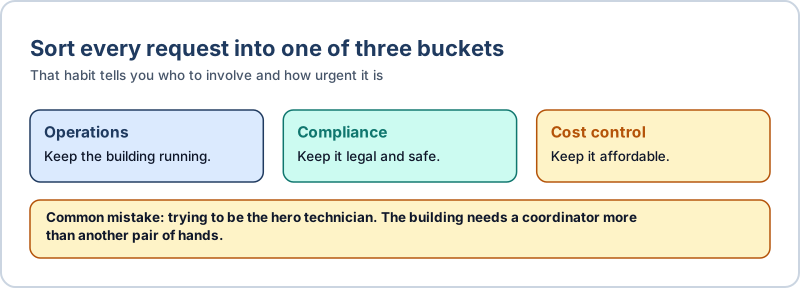
Every task you touch falls into one of three buckets: keep the building running (operations), keep it legal and safe (compliance), and keep it affordable (cost control). When a request comes in, sort it into a bucket first. That single habit tells you who needs to be involved and how urgent it really is.
The systems you own
A typical commercial building has mechanical (HVAC), electrical, plumbing, fire and life safety, vertical transportation, building envelope and grounds. You will not repair most of these yourself. Your job is to know how each one fails, who fixes it, what it costs and how long it takes.
Who you work with
Tenants, the property or asset manager, engineers and technicians, contractors, inspectors and the owner. Each has a different definition of a good day. Learning to translate between them is most of the job.
Common mistake
New managers try to be the hero technician. The building needs a coordinator with a clear head more than another pair of hands on a ladder.
Key Takeaways
- Every task you touch falls into one of three buckets: keep the building running (operations), keep it legal and safe (compliance), and keep it affordable (cost control).
- A typical commercial building has mechanical (HVAC), electrical, plumbing, fire and life safety, vertical transportation, building envelope and grounds.
- Tenants, the property or asset manager, engineers and technicians, contractors, inspectors and the owner.
Check Your Understanding
Which of your three responsibility buckets consumes most of your week, and is that the right balance for your building?
Action Step
Write down every building system on your site and, next to each, the name of the person or company that fixes it and the last date it was serviced. Blank spaces are your first to-do list.
This course is educational training. It does not issue a license, certification or credential, and it does not replace state or local licensing requirements, registered apprenticeships or employer safety programs. Always follow the current codes and standards that apply where you work, and never perform work you are not authorized or trained to do.